Showing posts with label Healesville Sanctuary. Show all posts

Thursday, July 5, 2012

Koala facts


By Essie – Thanks mom for helping me type.
Information came from Healesville sanctuary, their website and www.thekoala.com/koala/ Pictures came from http://carinbondar.com, australiangeographic.com.au, blog-city.info


Did you know that koalas are not bears?  They are marsupials. That means they have a pouch for their babies.

Did you know that Koalas live in gum trees-but only special kinds of eucalyptus and gum trees. They each have their own trees, but they also overlap with their neighbors. This where they play and meet each other. Neighbors are very important because koalas live in groups or societies. The  groups each have their own territory.


Did you know that koalas don’t drink water? They only drink water when they are ill or it is very dry. Its name means ‘no drink’ in the ancient Aboriginal language. Sometimes they will eat wattle or tea tree leaves as well as their favorite eucalyptus. Did you know that eucalyptus leaves are very poisonous to other animals? But koalas can eat 200-500 kg a day. Their sensitive nose helps them pick which leaves are good.


Did you know that koalas are very lazy? They sleep 18 -20 hours a day, which is way more than we sleep. They are mainly nocturnal, which means they wake up more at night.


Did you know koalas have a cushy bottom? They have thicker hair on their bottom to make it more comfortable to sit on hard tree branches.


Did you know koalas sometimes leave their trees?  They come down bottom first, not feet first like we do. To climb back up, they bounce up as high as they can and catch the tree with their front claws.  They are on the ground to change trees, they are in the most danger because of dingos, and cars.

Did you know that whenever koala babies are born they are pink? They are the size of a jelly bean and have no ears. They move to the pouch on their own and grow there for about 6-7 months. They drink only mother’s milk at that time. They will leave the mom and live on their own when a new baby (called a joey) is born.  This could be after 1 year, or could be 2 or 3 years.

Thank you for reading my koala article.

Good bye, Essie

Tuesday, July 3, 2012

Echidnas, Platypuses and those Egg-laying mammals

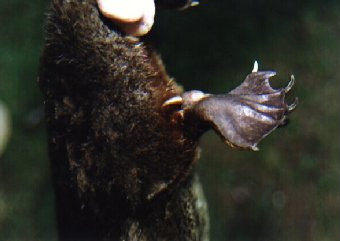
Platypuses, (not platypi) are part of a small family of mammals that includes only the platypuses and echidnas. First off: a physical description of a platypus: a platypus is an aquatic mammal; it has a duck-like bill that is completely covered in a thin layer of electro-sensitive, nerve rich skin. It has a small rodent-like body, with four webbed feet (again, more like a duck’s feet) and a flat beaver-like tail. I thought that platypuses were fairly large, but in actuality they are quite small: a little under two feet in length. They are covered in a rich brown fur that insulates and traps air much like a dry-suit or a penguin’s feathers.

Did you know (I didn’t) that the platypus hunts with its eyes closed? It gently sweeps its bill back and forth searching for an electrical signal from its prey. Once it catches its prey it then resurfaces and grinds it with its bill (as it doesn’t have any teeth).

Male platypuses have a poisonous spur growing out of the back of their hind legs. They use this when asserting dominance during the mating period and also for self defense. After the egg (yes they are mammals, and yes they lay eggs) hatches, the baby platypus/es is/are reared by its mother in a den, the mother secretes milk through pores in its belly to allow the young to lap it up. Platypuses do not have teats (these things are so weird).

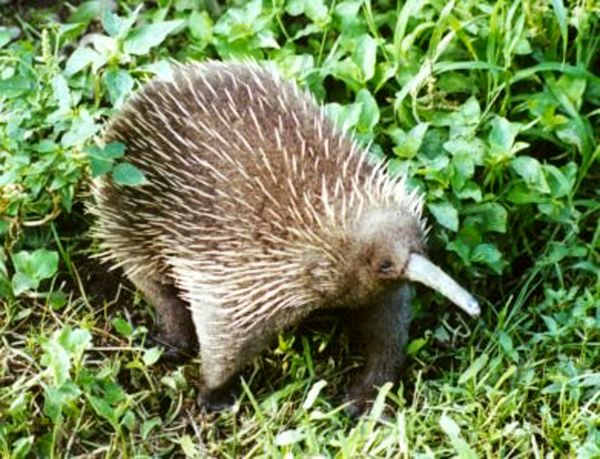
Echidnas are similar to platypuses in only the fact that they lay eggs and have electro-sensors surrounding its mouth, and the fact that they don’t have teats. They have squat hedgehog-like bodies but are significantly larger, depending on the species anywhere from a foot to a few feet in length, and growing up to about 40 pounds. They live on various types of insects (depending on the species) and have long snouts designed for that specific purpose.


      There you have it, the two most intriguing, strange, odd, wonderful and absolutely incredible creatures our God has designed.


Pics from Wikipedia.

Monday, July 2, 2012

Discovering Dingo Details


Beej Here Discovering Dingo Details
Dingo details for this article came from our experience at Healesville, their website (http://www.zoo.org.au/Healesville/Our_Animals/Dingo), and http://www.kidcyber.com.au/topics/dingo.htm and http://www.dingosanctuary.com.au/about_dingoes.htm
The pictures used in this article are ours.


Dingoes are wild dogs that live in the Australian bush and the outback areas.They are similar to Indian wolf dogs. The dingoes we got to pet were young (about 3 years old ) and one was named Tango.  Sorry- can’t remember the sister’s name.

The dingo does not have any natural predators in Australia (except humans) so they are at the top of the food chain. Some scientists believe they were brought over to Australia by seafarers from South Asia.
The dingoes move in packs and are very territorial. If a dingo moves into another pack’s territory they will start howling at each other instead of barking (as dingoes can’t bark). They do have a wide range of vocalizations from howling to yodeling, yelps, crows and purrs.

One major problem with the dingo here in Australia is that they can interbreed with domesticated dogs.  This is bad because, for some reason, this interbreeding seems to change the mindset and instincts of the animal. Instead of just killing a couple of sheep for food, the mixed breed will kill off a whole flock. It also is diminishing the line of the dingo and making a 'hybrid'. 

The dingo is an omnivore who eats mainly meat- Kangaroos, koalas, wallabies, sheep, wombats, reptiles and pretty much any meat they can catch are all on the menu. They will also occasionally eat greens and insects.

Dingoes only breed once a year, unlike domesticated dogs, which can breed twice a year. They have a litter of 5 pups usually and both parents help care for the babies. They will bring the food close to the den so the pups can ‘hunt’ for it. Dingoes mate for life.

Dingoes grow to about a foot and a half to two feet tall and about four feet long. They have course bushy coats ranging in colors from yellow to tan to brown to blackish. They have a bushy tail and large, upright, pointy ears. Dingoes are very intelligent dogs who have strong personalities and develop very strong bonds with their pack. Aboriginals used dingoes in hunting. In Aboriginal languages, they were called warrigal, noggum, boolomo, mirigung and maliki.


The up-close experience was really cool… here are some thoughts from those who got to get up close and personal with these wild dogs:


The Older thought the dingoes were extremely intelligent. He also thought it was funny that the trainer said training a dingo is like trying to train a cat. They are very independent and if you don’t have food, they really won’t listen.


Essie's thoughts: “The dingoes were pretty hyper and when one jumped up on me, it was a little surprising. I was glad I have big dogs at home so it didn’t freak me out. Their fur was soft and their tongues were tickly.”


As for me, I thought the dingo experience was extremely awesome. I think they are my favorite Australian animal… they are at the top of the food chain, just like lions on the African Savanna.


Thank you for reading this in-depth dingo discovery. Coming next…. Test your knowledge about the Tasmanian Devil.

The World's (and Australia's) Top Ten Venomous Snakes

Hello Folks,

The Older here.

I have long had a fascination with all things scaly, amphibious, or otherwise reptilian. So, when we went to the Healesville sanctuary, looking at the top ten most venomous snakes was one of my favorite things. Australia seems to have the deadliest everything around here... The world's deadliest jelly fishes... deadliest spiders... *shudders*

Sooo, I thought I would share some snakes we saw with you! :)

Images are mine unless noted.

Let's begin.
#10 The Mulga. Also known as the "King Brown Snake"


Australia seems to have trouble with it's colors and species... This brown snake is actually part of the black snake family. These guys can grow to a royal size of six to seven feet, depending on where they live. The toxins the Mulga produces are not particularly dangerous in small quantities, but when this snake bites it's prey, it releases 15x more toxin than other snakes. Their bite can kill a full grown man in 2-3 minutes. I also read that if a person remains calm until anti venom is given, they will most likely survive.


#9 The Dugite

The Dugit is a smaller snake, measuring on average 3 feet long, but has been recorded up to six feet. What makes this snake dangerous is the fact it is active in the day time, especially during the mating season when they are all Twitterpated. :P The venom is extremely concentrated, attacking and destroying basic proteins in the tissue. While this snake can kill a human quickly, the last recorded fatality was back in 1993.

#8 The Lowland Copperhead
(image from Wikipedia)


These snakes are not at all related to the American copperhead of which we all know. These guys grown to about 3-4 feet.The Lowland copperheads are extremely reclusive, only biting when stepped on or dug out of their den (don't really know why you would be doing that... Anyway) Their fangs are very short, so boots and thick pants often provide protection from the bite. If one is bitten however, they will die unless anti venom is provided promptly afterwards.

#7 The Gwardar

The Gwardar is a member of the brown snake family, and is about 3 feet long. These are very fast and quick snakes, active and hunting during the day. The fangs of a Gwardar are very small, equaling a painless bite. Often people are bitten without ever knowing it. First aid is easily applied to counteract the venom, but since people often don't realize they have been bitten, it is usually administered to late.


#6 The Common Death Adder

I will be honest, I think Death adders are some of the coolest looking snakes out there. These short and squat snakes are rarely longer than 3 feet in length. The are not the most agile either, preferring to sit and wait for prey instead of hunting it. Their fangs some of the longest of any known snake, second only to the tapian. This makes their bites quite painful. The adder accounts for the majority of snakebites, since it doesn't flee from humans, preferring to stay and fight. The venom attacks the central nervous system of its victim, causing near immediate muscle paralysis, the diaphragm and lungs to cease to function, then death as the toxin destroys the cerebral cortex. Although that sounds pretty awful, the ratio of bites to deaths is very low. About 8 in 100,000 people bitten die. It all depends on how much venom the adder is able to inject.


#5 The Red Bellied Black snake
Image from skyscrapercity.com/forums


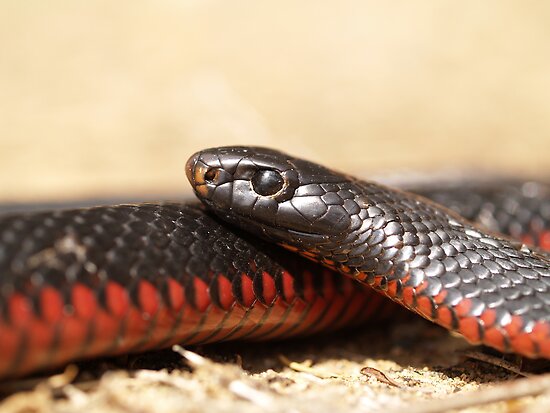
The red bellied black snake is one of the most distinguishable of the 10 deadliest snakes. It is very docile and will rarely bite a human. When it does hoever, the venom can be lethal, but there is not one recorded instance where a human has died from a bite from this snake. The reason for this is most of these guys live in urban gardens, so first aid can be applied quickly and effectively. In the wild, you will rarely find one, as they flee at the first hearing of footsteps.


#4 The Tiger Snake

The Tiger Snake is one of the hardest snakes to identify out of these ten, as the colorings vary from black, to brown, to yellow, and even olive. The stripes vary in those colors too. Tiger snakes grow to a size of 6-7 feet long and are not usually aggressive, though will bite if they feel threatened. While death does occasionally occur, the venom is more known for the causing immense amounts of tissue damage and causing kindey failure. The venom is slow moving, so easily containable around the bite, so as long as first aid is applied immediately, one will not die.

#3 The Costal Tapian

The Costal Tapian is number three on the world's deadliest snakes list for good reason. This snake is active during early morning and extremely fast. They can grow to about 6 feet, but the standard size is around 4 feet. What makes this snake so deadly is the fact when it is hunting or defending itself, it will strike not once, but 3-4 times in less than a second. Then it flees to a safe distance and lets it's victim die. Death for a rodent is near instantaneous, and a human will die in about 30 minutes if not treated. The mortality rate upon being bitten with treatment is 90%... The reason for this is the venom is a neurotoxin, attacking the brain and spine without bothering the lesser nervous systems.

#2 The Common Brown

Common brown snakes grow to about 4 feet long, and are found mainly in woods, grasslands, and urban areas. This snake alone accounts for about half the deaths that occur by snake bites, because  it lives in close proximity to humans. When biting, these snakes can lunge several feet, then retreat quickly after giving said bite. When Anti-venom is applied, the victims usually survive. However, because of the fast clotting and aggressive venom, usually more than one dose must be applied. Most deaths are caused by the venom reaching the brain and causing internal bleeding and hemorrhaging. About 5 deaths a year occur due to this snakebite.

#1 The Inland Taipan
image from funpicland.com

The world's most venomous snake, and native to australia, grows to be about 5 feet long. While the venom in this snake is potent enough to kill over 250,000 mice in one bite... There has never been a recorded death of a human by this snake. The reason for this is it is extremely shy and reclusive. It also lives in the middle of Australia, as opposed to the coast. The middle of Australia is arid and sparsly populated, so people do not often encounter this snake. So while it's venom could kill a human in as little a 15 minutes, it is not one that has ever killed a human.


So there you go! The 10 most venomous snakes in the world... living in Australia. Hope you enjoyed it and learned something! :)

Healesville Animal Sanctuary


One rather chilly, drippy day in Southern Australia, the clan went to see some amazing things at Healesville Animal Sanctuary. WE love zoos (!), but this was a sanctuary, not a zoo. Only indigenous animals are here and they were in a very natural habitat!


Everyone here is so friendly and Robin at the ticket counter was no exception! She helped us choose what we wanted to do, got our schedule plugged in and helped us figure the most cost effective way to get it all done. She ROCKED!


To say the sanctuary was beautiful would be an understatement.  Unusual bushes, and up to 200 year old trees ...


And the animals we were able to see were also amazing… 


Koalas- cute but boring, just slept the whole day! 


Emu- they made a weird low grunting noise that sounds like a pig!


Tasmanian Devil- did you know they have developed a facial tumor disease that is threatening their entire population?


Dingos- wait till you see the upcoming dingo experience Essie, The Older and Beej had!


.


Lots of amazing birds


An incredible bird show- and Essie had a special guest sit with her for part of the show. Many wild ibis roamed the sanctuary... they were pretty noisy, even during the bird show. 


And of course kangaroos! We were able to feed and pat the kangaroos- see Beej’s upcoming post for more Roo information.   We learned so much!!!  


Lunch was yummy (and very affordable) meat pies with chips!


We got a little wet and a little chillier as the day progressed, but the animals didn’t mind and we were able to hide from the rain in the platypus and reptile house. The Older will fill you in on the snake info in the next few days. The platypus house was totally dark, so sorry, no pictures. These little freaks of nature certainly verify that our creator has a sense of humor. It looks like there were a few spare parts at creation and God just stuck them all together. The Tall One is going to post a platypus exposé shortly. So stay tuned…. We had a great time this weekend, can’t wait to sort through all the pictures and get the posts ready to share with you. Please forgive us for the delay in posting and the odd stretchy look of some of the pictures.  We are having a few computer picture issues...

The Older wrote his own post on his blog www.theramblingstone11.blogspot.com  so check it out. I actually think it turned out better than our collaboration here... :)

Praying for you as you suffer through the hot dry weather there!