Showing posts with label Beej. Show all posts

Friday, August 31, 2012

The Saltwater Crocodile

Animalia Chordata Repitlia Crocodyli Crocodylidae Crocodylus Porosus

The saltwater crocodile grows to be one of the largest carnivores in Australia. Salties eat fish, birds, snakes and anything that walks on two or four legs. This is why salties are at the top of a couple countries food chains.


Salties live in and around the rainforest, in the swampy areas. These salties can live salt or fresh water, it doesn’t matter. During the summer salties stay in the water or cover themselves in mud to keep cool. I think they’re rather lazy animals.


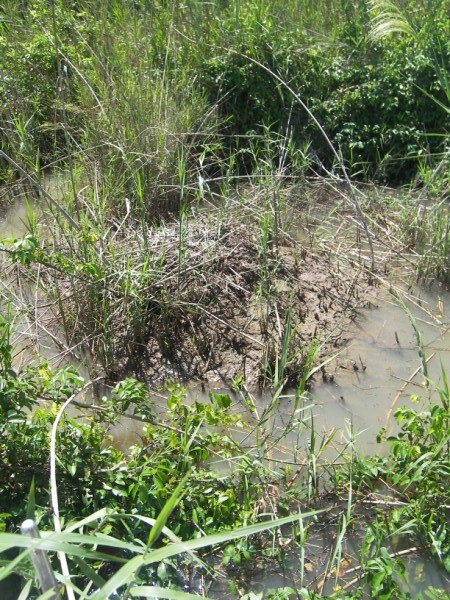
Salties mate in August or September during this time the parents become even more territorial. Salties nests are made out of grass and stuff the nest has to be partially submerged or else the eggs will dry out but if it is too deep the babies will drown. The female will lay 40-60 eggs at one time. The eggs will hatch on an average of 80 days. Gender is determined by the temperature of the egg.


image from http://www.verhanneman.be/australia.html

Salties have extremely slimy skin; just kidding, salties skin is really soft and smooth. Salties tails and back have (scoots), salties use these to slip into the water with not one sound or ripple which makes it possible for salties to sneak up on prey.

Crocodiles have an amazing gift; salties can feel the vibrations of the ground around them so it’s really hard sneak up on salties, so salties can know where salties prey is. The ways that salties catch prey, is by jumping out of the water and grabbing them. Once the salties catch its prey, and rip the victim apart by shaking its head vigorously side to side. This rips the victimps to pieces. This makes digestion easier even though crocs stomach is specially made to digest almost anything.

Fun Fact; the world’s largest salt water crocodile was 20.24 feet long and weighted over a ton

Beej

Tuesday, July 3, 2012

Tasmanian Devil Test


Beej here to test your Tasmanian Devil intelligence...


Sources and pictures: http://www.zoo.org.au/Healesville/Our_Animals/Tasmanian_Devil http://www.kidcyber.com.au/topics/tasdevil.htm http://www.tassiedevil.com.au/tasdevil.nsf/About-Tasmanian-devils


Tasmanian Devil Test- How much do you know about this little critter.


1. Species Name:
A. Sarcophilus harrisii
B. Deadanimal eatious
C. Macropus giganteus
D. None of the above
E. All of the above

2.Tasmanian Devils are:
A. Birds
B. Reptiles
C. Marsupials
D. All of the above
E. None of the above

3. Tasmanian Devils eat:
A. Carcass of any dead animal
B. Bones and fur
C. Hunted birds, reptiles and rodents
D. All of the above
E. None of the above

4. Tasmanian devils
A. Produce a strong odor when stressed
B. Open mouth 120-degrees
C. Sneeze before fighting
D. All of the above
E. None of the above

5. Tasmanian devils young are weaned at
A. two – three months
B. five –six months
C. 12-18 months
D. All of the above
E. None of the above

6. Tasmania devils
A. Amble along at 6 kph ( approx 4 mph)
B. Have been clocked at speeds of 20 kph (approx. 12 mph) when threatened
C. Gallop at up to 13 kph (approx. 8 mph)
D. All of the above
E. None of the above

7.  Tasmanian devils are
A. Active in the day
B. Active in the night (nocturnal)
C. Active in both- whenever food is available

8. Tasmanian devils are most threatened by
A. Facial tumors
B. Loss of habitat and persecution by humans
C. The red fox
D. Other devils
E. None of the above

True or False…
T or F  1. Tasmanian devils are territorial.
T or F  2.  Tasmanian can climb trees.
T or F  3. Tasmanian devils are solitary creatures only coming together to mate.
T or F  4.  The Tasmanian devil lives only on Tasmania.
T or F  5. Tasmanian devils once had a bounty offered for them.


Answers:
1.    A- Sarcophilus harrisii
2.    D-all of the above, Just joking…C- they are Marsupials. They have a pouch and give birth to live young
3.    D- all of the above. They play an important role in keeping the bush clean of dead animals, but they can also hunt. They eat the entire animal -bones, feet, fur and all.  
4.    D- all of the above- really! They do not stink when they are calm and relaxed, but do when they are stressed. Their amazing jaws allow it
5.    B- they stay in the pouch for about 4 months, are weaned at 5-6 months and are thought to be living on their own by 8 months. They live about 7-8 years.
6.    B-Tasmanian devils are nocturnal and usually hide in a den or dense bush during the day.
7.    C- Tasmanian devils run with their back legs together. with rocking run they can reach speeds of up to 13 kph.
8.    A-Although all threats are real, the development of the Devil Facial Tumour Disease, which was discovered in 1996, has become the most deadly in recent years.
True or False
1. F- They are not territorial, but they do have a home range- up to 16 km.
2. T-Young Tasmanian devils are agile and can climb trees
3. F- Tasmanian devils are known for their loud communal feasts. They have a hierarchy within the pack.
4. F – Tasmania devils live in zoos all around the world.
5. T- In the 1930s, the devils were trapped and poisoned. Bounties of 25 cents for males and 35 cents for females were paid.

Let us know how you did!!! Coming next ...Little Penguins!

Monday, July 2, 2012

Discovering Dingo Details


Beej Here Discovering Dingo Details
Dingo details for this article came from our experience at Healesville, their website (http://www.zoo.org.au/Healesville/Our_Animals/Dingo), and http://www.kidcyber.com.au/topics/dingo.htm and http://www.dingosanctuary.com.au/about_dingoes.htm
The pictures used in this article are ours.


Dingoes are wild dogs that live in the Australian bush and the outback areas.They are similar to Indian wolf dogs. The dingoes we got to pet were young (about 3 years old ) and one was named Tango.  Sorry- can’t remember the sister’s name.

The dingo does not have any natural predators in Australia (except humans) so they are at the top of the food chain. Some scientists believe they were brought over to Australia by seafarers from South Asia.
The dingoes move in packs and are very territorial. If a dingo moves into another pack’s territory they will start howling at each other instead of barking (as dingoes can’t bark). They do have a wide range of vocalizations from howling to yodeling, yelps, crows and purrs.

One major problem with the dingo here in Australia is that they can interbreed with domesticated dogs.  This is bad because, for some reason, this interbreeding seems to change the mindset and instincts of the animal. Instead of just killing a couple of sheep for food, the mixed breed will kill off a whole flock. It also is diminishing the line of the dingo and making a 'hybrid'. 

The dingo is an omnivore who eats mainly meat- Kangaroos, koalas, wallabies, sheep, wombats, reptiles and pretty much any meat they can catch are all on the menu. They will also occasionally eat greens and insects.

Dingoes only breed once a year, unlike domesticated dogs, which can breed twice a year. They have a litter of 5 pups usually and both parents help care for the babies. They will bring the food close to the den so the pups can ‘hunt’ for it. Dingoes mate for life.

Dingoes grow to about a foot and a half to two feet tall and about four feet long. They have course bushy coats ranging in colors from yellow to tan to brown to blackish. They have a bushy tail and large, upright, pointy ears. Dingoes are very intelligent dogs who have strong personalities and develop very strong bonds with their pack. Aboriginals used dingoes in hunting. In Aboriginal languages, they were called warrigal, noggum, boolomo, mirigung and maliki.


The up-close experience was really cool… here are some thoughts from those who got to get up close and personal with these wild dogs:


The Older thought the dingoes were extremely intelligent. He also thought it was funny that the trainer said training a dingo is like trying to train a cat. They are very independent and if you don’t have food, they really won’t listen.


Essie's thoughts: “The dingoes were pretty hyper and when one jumped up on me, it was a little surprising. I was glad I have big dogs at home so it didn’t freak me out. Their fur was soft and their tongues were tickly.”


As for me, I thought the dingo experience was extremely awesome. I think they are my favorite Australian animal… they are at the top of the food chain, just like lions on the African Savanna.


Thank you for reading this in-depth dingo discovery. Coming next…. Test your knowledge about the Tasmanian Devil.