Showing posts with label Wildlife. Show all posts

Friday, August 31, 2012

The Saltwater Crocodile

Animalia Chordata Repitlia Crocodyli Crocodylidae Crocodylus Porosus

The saltwater crocodile grows to be one of the largest carnivores in Australia. Salties eat fish, birds, snakes and anything that walks on two or four legs. This is why salties are at the top of a couple countries food chains.


Salties live in and around the rainforest, in the swampy areas. These salties can live salt or fresh water, it doesn’t matter. During the summer salties stay in the water or cover themselves in mud to keep cool. I think they’re rather lazy animals.


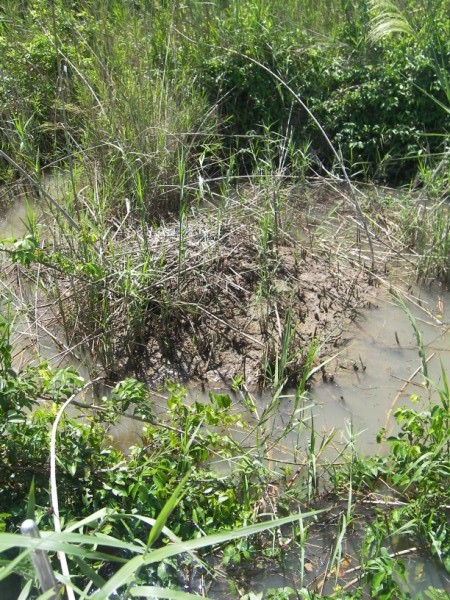
Salties mate in August or September during this time the parents become even more territorial. Salties nests are made out of grass and stuff the nest has to be partially submerged or else the eggs will dry out but if it is too deep the babies will drown. The female will lay 40-60 eggs at one time. The eggs will hatch on an average of 80 days. Gender is determined by the temperature of the egg.


image from http://www.verhanneman.be/australia.html

Salties have extremely slimy skin; just kidding, salties skin is really soft and smooth. Salties tails and back have (scoots), salties use these to slip into the water with not one sound or ripple which makes it possible for salties to sneak up on prey.

Crocodiles have an amazing gift; salties can feel the vibrations of the ground around them so it’s really hard sneak up on salties, so salties can know where salties prey is. The ways that salties catch prey, is by jumping out of the water and grabbing them. Once the salties catch its prey, and rip the victim apart by shaking its head vigorously side to side. This rips the victimps to pieces. This makes digestion easier even though crocs stomach is specially made to digest almost anything.

Fun Fact; the world’s largest salt water crocodile was 20.24 feet long and weighted over a ton

Beej

Wednesday, August 22, 2012

In the jungle.......the crocodile sleeps tonight....


Yep, Dad wanted to make sure that we saw saltwater crocs while we were in Australia. And they seem to be prolific in the Daintree area (North of Cairns)... So we found this; 
So we got in our little ferry and boated down the river. The first thing we saw was a bird (croc food). It was some kind of egret or crane, the guide named everything, birds, trees, specific crocs. It was pretty awesome.


Then we saw this little guy: a little kingfisher. The smallest kingfisher in the world. These little guys would shoot right across the river, they were ridiculously hard to shoot... with a camera I mean.


I think this is a Brahminy Kite (it may have been a osprey) he followed us around, and near the end two others (not the two at the bottom of the picture) joined him.


Another Crane of sorts....


And the first croc we saw; For some reason I can't remeber her name, but she was a Mom, she had several little crocs around her as well.


This little one was from last year's litter, he hing around next to mom for a while.


I think this is Schute. He apparently lost a schute at one point. He is covered in mud to keep him from getting sunburned.


And the last croc we saw this was a big one, bigger than either of the other two we saw that day


Beej and Essie both got to drive.


Well that's all I've got, talk to you all later,

The Tall One.


Thursday, August 2, 2012

Trip to the Olympic Park

One of the first things we did in sydney was visit the Olympic Park. It amazes me the entire thing was built for the olympics, but it was, and it was amazing to see. I wanted to also see the Saltmarshes in the park, so we did some hiking out of the main urban area.

Let's get to the pics.
Here is the Anz Stadium in all its glory. This thing was huge. I can't even begin to explain how big it was.

Here we have the train station. This was also custom built for the olympics. The train comes in underground, so you don't have any tracks visible to people in the park. 

Of course, the cauldron that was lit for the games. It looks like a spaceship to me. ;) Seriously though, it was very cool to see it in person. We watched the opening ceremony with this exact cauldron being lit... Talk about surreal. 

After a quick game of giant chess... (three foot tall pieces) Ok, not so quick, but I won though. :) We headed to the outer edges of the park. This part was the more rustic area, lots of landscapes and creation to look at. 
This was called the "Brick Pit". Basically it consisted of a huge circular walkway around and above a body of water. It served as a conservation center for the local frogs which lived in the area. As you can see, it is very tall and very large.

Another site we walked to, was the bird wetlands. It was amazing to see hundreds of birds in some places, and water only a foot or so deep, strechting out hundreds of yards.

A little family of ducks right here... :)

A cool surprise and little side path led us to Shipwreck cove. At first I was like "Woah! Real shipwrecks!"
But then I read the sign.
It seems, people used to just wreck ships they no longer needed in this bay. So, there were a few ships remaining from the wrecks.

I almost fell into the bay getting this pic... not even joking. 0_0 The rocks were covered in some rather slippery brown silt. So glad I didn't fall in!

The last thing we saw before going back to the stadium... Were the Saltmarshes. I think they put the boardwalk at the end of the trail because everyone wanted to see it... We walked over 6 miles to get here, yeah, the park was that big. ;)
This place was one of the coolest places we have visited in my opinion. It was for one, dead quiet, except for the distant sound of cars on the highway.

For those of you who know the smell... It smelled like mosquitoes. If that makes any sense. It was  a warm, damp, and moist atmosphere. Add a little salt to that air, and you get what it was like. To me, it was such a calming and relaxing place.

The trees were not tall, but the walk was made so you walked under them. You can see from the shadows there were not many gaps in the trees at all. 99% of the walk was in the shade

And that was our trip to Sydney olympic park. It was a long day, (we walked over 10 miles) but very cool to see all kinds of olympic history here. Will definitely be remembering this trip for a long time.

Austin

Monday, July 23, 2012

Humpback Whales

Their scientific name is Megaptera novaeangliae.
They travel the great distance of 10,000 kilometers or 6,213.71192 miles. There are different ‘branches’ of humpback whales and they usually follow the same migratory route-1) Hawaii to Alaska and the western coast of the Americas, 2)The eastern seaboard has a group that moves down to the Carribbean and up to Maine, and then3) the Antarctic and Australian group.

Humpback whales eat a ton of food a day (literally), usually krill, plankton, sand lance (in Maine) and other small fish- herring, mackerel, and squid. Krill, which are very small only 6 centimeters or 2.36220472 inches long, have large eyes for such a small body and are mostly clear but have a reddish orange section on their back. They can breed more than once during the season and they can lay up to 10,000 eggs at once.

Although these whales are big(max 16 Meters or 55 feet and Weigh 40 tons or 80,000 lbs), they are not the biggest whale.


Shortly after Europe colonized Australia the Humpbacks were hunted for their oil and baleen (or ‘whalebone’). Harpoon guns and steam-driven whaling boats made hunting more efficient and cause d the humpback o come very close to extinction. They have made a strong comeback.


Humpback calves stay with their mother for 11-12 months, but during this time, they are often attacked by killer whales or sharks. Although we heard there was a calf born in the Sydney Harbor while we were there, we did not actually get to see it.


Humpback whales can be identified from the shore by their ‘blow’- the spray of water when the come up to breathe,


photo by http://www.mersea.com/humpback_info_page_2.htm 

by the shape of their back when they ‘surface’,


by their ‘fluke’ or tail,


Photo from http://www.uq.edu.au/whale/humpback-whales


by their pectoral fin or when they ‘wave’,


and of course if they ‘breach’ the water- or jump- it is easy to tell what kind of whale you are seeing.


(photo by http://www.familyadventuretravelworks.com/tag/humpback-whales )

We saw all of these except the breach.
It was an unexpected treat to see these whales as we were driving down the Great Coastal Highway. Photos are ours, unless otherwise noted.

NOTE: My apologies to Beej for not posting this report earlier. I just missed it.  And as an addendum, we can now see whales from our balcony - Unbelievable! Stay tuned for more... Mom


Sunday, July 15, 2012

WE SAW WHALES!!


Great ocean road  continued.. WE SAW WHALES!!
Yep, yep, it is true!!
We saw many interesting things.. this hotel seemed to be in the middle of nowhere. We were just driving along and zoop-zoop, there it was! I hope that is a good excuse for the catywonkiness of the picture, I had to grab the camera really quickly!

And then, as we continued driving and admiring the beautiful scenery, we saw lots of cars pulled off the road. We also saw the flash of police lights, so I thought someone had an accident, but… as we got closer….we joined them because we saw THIS!!! Can you see them... whale fins!!


But we were able to get a better view!


And then even better. 


We stayed quite a while and moved down the coast with these amazing creatures.  They were just hanging out, drifting slowly down the shore.

Humpback whales! We did get a bit of great video- including a perfect fluke (tail shot) ! We can’t wait to show it to you all when we get home!

Monday, July 9, 2012

Guest Post: Phillip Island, Australia


I've noticed that guest posts are all the rage on these blog things right now. Soooooooo...

Here is a post from none other than  myself, "The Older." This is taken from my blog:
www.theramblingstone11.blogspot.com

At the request of "The Mom" ;)

~~~~~~~~~~~~~~~~~~~~~~~~~~~~~~~~~~~~~~~~~~~~~~~~~~~~~~~~~~~~~~~~~~~~~
Time to show all you guys the other place we went last weekend, and that was Phillip Island.

Phillip Island is most famously known for the penguin parades which occur every evening on the island. The only problem is... you aren't allowed to take pictures during the parade.

However, you are allowed to take pictures everywhere else! So I did. :)
It was really cold and rainy during the day. At lunch it was pouring. So while the weather was not the most enjoyable, the sights more than made up for the cold wetness.

 This beach was one of the first ones we saw upon entering the island. these beaches are a lot more... turfy (not a word I know). Meaning there are shrubs and rocks almost right up to the water. Looks quite nice, but makes you think twice about pulling off your shoes and running down the beach. :)
Phillip Island has really pretty rolling hills covered in short bushes. In some ways it does look like a desert, but in others a tropical landscape. I liked it. :)

 Another image of the landscape, stylized in sepia tones...

 One thing you immediately notice about this island's beaches, is the enormous amount of surf that is present. There were tons of waves that looked great for surfing... I say that no because I surf, but because surfers come to this island to catch some waves in the summer. It was rather cold to be doing that now.

 During lunch at a cafe, this old car pulled up and parked right outside where we were eating.  I don't know what kind of car it is, but thought it looked pretty cool. :)

 The bird you see here is called a Purple Swamphen. There were several of these milling about on the grounds. They moved a lot though, so it was difficult to finally get a pic of them.

If you are thinking "Goose!" you would be correct. This is called a Cape Barren Goose. They make the funniest low grunting noise without opening their beaks. We saw one goose with a little group os goslings. They were very fun to watch.

One place we went to while waiting for it to become dusk, as that is when the penguins come in from the ocean, was called "The Nobbies" This was on the very southernmost tip of Phillip Island, and had TONS of seals on the rocks. Unfortunately they were so far away, we had to use a special made camera to zoom in on them. It was also awe inspiring to see surf hitting against the rocks.

God is so good to us. After it had rained all day long, we went to the penguin center and prepared ourselves for a long outside wait in the 40 degree weather, in the rain, with ocean winds... to see the penguins come home.
   Right as we stepped out of the van, the sky started to clear, and this double rainbow appeared. It remained clear for the most part the entire rest of the evening. So while it was still cold, it wasn't raining like it had been the whole day.

This little box is a penguin house! Rangers and community groups in the past have come down to the island and built these little boxes so the penguins have a place to live. They are about 2 feet wide and 18" tall. 

So, you already know that picture taking of the penguins was a big nono... However, here are some pictures I found online... so you can see what we saw. :)
This one is really old, but we were really that close!
If you would like to see more, just google "Phillip Island Penguin Parade" :)

So that was our trip to Phillip Island! We saw some incredible stuff and made a lot of good memories. 

~Austin~

Thursday, July 5, 2012

Koala facts


By Essie – Thanks mom for helping me type.
Information came from Healesville sanctuary, their website and www.thekoala.com/koala/ Pictures came from http://carinbondar.com, australiangeographic.com.au, blog-city.info


Did you know that koalas are not bears?  They are marsupials. That means they have a pouch for their babies.

Did you know that Koalas live in gum trees-but only special kinds of eucalyptus and gum trees. They each have their own trees, but they also overlap with their neighbors. This where they play and meet each other. Neighbors are very important because koalas live in groups or societies. The  groups each have their own territory.


Did you know that koalas don’t drink water? They only drink water when they are ill or it is very dry. Its name means ‘no drink’ in the ancient Aboriginal language. Sometimes they will eat wattle or tea tree leaves as well as their favorite eucalyptus. Did you know that eucalyptus leaves are very poisonous to other animals? But koalas can eat 200-500 kg a day. Their sensitive nose helps them pick which leaves are good.


Did you know that koalas are very lazy? They sleep 18 -20 hours a day, which is way more than we sleep. They are mainly nocturnal, which means they wake up more at night.


Did you know koalas have a cushy bottom? They have thicker hair on their bottom to make it more comfortable to sit on hard tree branches.


Did you know koalas sometimes leave their trees?  They come down bottom first, not feet first like we do. To climb back up, they bounce up as high as they can and catch the tree with their front claws.  They are on the ground to change trees, they are in the most danger because of dingos, and cars.

Did you know that whenever koala babies are born they are pink? They are the size of a jelly bean and have no ears. They move to the pouch on their own and grow there for about 6-7 months. They drink only mother’s milk at that time. They will leave the mom and live on their own when a new baby (called a joey) is born.  This could be after 1 year, or could be 2 or 3 years.

Thank you for reading my koala article.

Good bye, Essie